


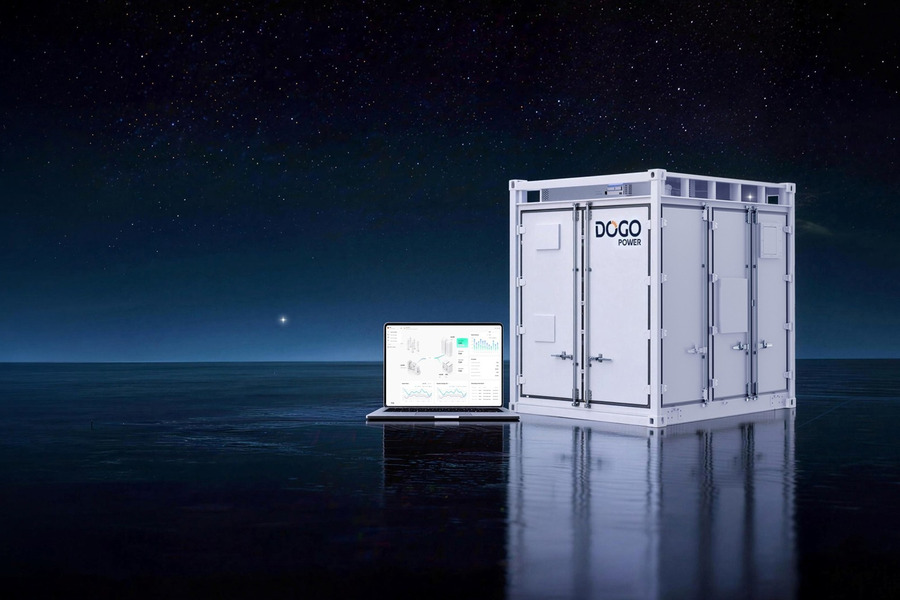
At DoGo Power, we help commercial and industrial (C&I) businesses lower electricity bills by coordinating battery storage, solar power and energy management. Batteries can charge when electricity is cheaper and supply on-site loads when rates rise. A well-planned discharge schedule can also help reduce demand charges.
For projects planned in 2026, our starting point is your site's electricity bill and the tariff that will apply when the system begins operating. Peak periods, seasonal rates and demand charges vary by location and contract, so the battery's charging plan needs to match your prices and working hours.
Review supply and network charges together, even if they arrive on separate bills. Check whether prices change on weekends or holidays, whether grid charging is permitted and what export limits apply. If your electricity contract is due for renewal, include the expected changes in the savings calculation.
Separate Energy Costs from Demand Charges
A time-of-use (TOU) tariff assigns different electricity prices to different periods. Battery storage can shift grid purchases into cheaper hours while your equipment continues operating during expensive hours. This is TOU energy arbitrage: charging at a lower price and using the stored energy to avoid higher-priced purchases.
Energy charges depend on the electricity consumed, measured in kWh. Demand charges depend on billable power, often measured in kW. Fixed charges generally remain payable. Cutting expensive kWh and lowering billable kW are separate objectives.
Our C&I energy storage solution supports TOU energy arbitrage, demand response and solar-storage operation. Select an operating strategy around the costs your site can avoid, with demand-response participation subject to local program requirements.
Calculate TOU Savings with a Worked Example
Allow for charging and discharging losses before estimating savings. For grid-charged energy:
Energy-charge benefit per delivered kWh = avoided peak rate − (charging rate ÷ round-trip efficiency).
Round-trip efficiency is the share of charging energy returned as usable electricity. Use a decimal and measure charging and delivery at the same system boundary.
Illustrative calculation: the USD prices and efficiency below are teaching assumptions.
|
Item |
Value or calculation |
|---|---|
|
Charging price |
$0.10/kWh |
|
Avoided peak price |
$0.25/kWh |
|
System round-trip efficiency |
90%, entered as 0.90 |
|
Energy delivered to replace peak imports |
200 kWh |
|
Charging energy required |
200 ÷ 0.90 ≈ 222.22 kWh |
|
Charging electricity cost |
222.22 × $0.10 ≈ $22.22 |
|
Avoided peak electricity cost |
200 × $0.25 = $50.00 |
|
Energy-charge benefit for this discharge |
$50.00 − $22.22 = $27.78 |
Check How the Tariff Defines Billable Demand
Demand savings require a reduction in the demand used for billing. A brief drop in instantaneous power may leave that figure unchanged.
Use the utility rate assessment guide to check:
- Measurement interval: the period over which demand is measured or averaged.
- Billing window: whether the charge applies during specified hours.
- Non-coincident demand: whether the highest monthly demand counts regardless of time.
- Ratchet: whether historical peaks set a minimum billable demand.
For a simple monthly charge, demand savings = reduction in billable kW × applicable monthly demand rate. Multiple charges and historical ratchets require the complete billing calculation. A past peak can delay savings even after current demand falls.
Our recommendation is to recalculate the whole bill with and without storage under identical load assumptions. Include battery charging: a cheap energy window can still produce a costly demand peak.
Match Battery Power and Capacity to Your Site
Start with how much grid demand you want to reduce and how long the battery needs to support it. For example, a hypothetical reduction of 500 kW over two hours requires 1,000 kWh delivered to site loads. Power and usable energy both need to match that target.
Our DG1000-1672kWh-2H0 brings 1,672 kWh of rated capacity into an all-in-one C&I storage system. It combines LFP batteries, battery management, a power conversion system (PCS), energy management and fire protection in one container. Bringing these components together simplifies equipment coordination and on-site integration.
For daily TOU operation, the system offers several practical advantages:
- Cooling for batteries and power conversion: liquid cooling serves both the battery packs and PCS, managing heat in both parts of the system during charging and discharging.
- Coordinated energy use: support for solar, EV chargers, generators, site loads and the grid helps bring storage into the wider site energy system.
- Planning around changing conditions: solar, load and tariff forecasting supports charging and discharge decisions as generation, demand and prices change.
Safety features include cell-level early warning for thermal runaway, pack-level aerogel insulation and aerosol fire suppression. These provide layers of monitoring and protection alongside thermal management.
Our sizing assessment connects these capabilities with your actual operating needs. For the example above, we check that the selected configuration can supply 500 kW continuously and deliver 1,000 kWh after losses while preserving the required backup reserve. The assessment also accounts for battery aging, transformer capacity and whether the low-cost charging window leaves enough time and grid capacity to recharge.
Adjust Battery Dispatch as Site Conditions Change
A charging plan must account for later demand as well as the next expensive period. Our Energy Management and Control System supports solar and load forecasting, intelligent dispatch, monitoring, alerts and analysis of TOU and demand savings.
Illustrative warehouse scenario: an initial plan discharges through the afternoon price peak. Reviewing the complete load schedule reveals that late-shift EV charging could set the month's billable demand. The plan therefore needs to preserve energy for that later load while maintaining the required backup reserve.
|
Stage |
Operating decision |
|---|---|
|
Cheaper charging window |
Charge within the site's available connection capacity. |
|
Afternoon price peak |
Discharge part of the available energy and preserve the planned reserve. |
|
Late-shift vehicle charging |
Use allocated energy to help control billable demand. |
For a real factory application, our Mali factory rooftop project combines 5 MW of solar with 10.72 MWh of storage. That configuration shows solar and storage working together at factory scale. It does not establish how much a different site will save through TOU operation; that requires its own tariff, load data and operating calculation.
After commissioning, compare actual imports, billable demand and battery operation with the agreed baseline. Investigate changes in production hours, solar output or tariff schedules before attributing every difference in the bill to storage performance.
Model a Full Year at the Right Time Resolution
Use chronological load data covering a complete year where available. Hourly averages can hide demand peaks when billing uses shorter intervals. Flag missing readings, document replacement assumptions and test how those assumptions affect results.
Our EcoSizing planning tool helps compare capacity configurations and operating strategies for solar, storage, generators and the grid. It provides economic analysis and lifecycle modelling.
Explore the EcoSizing sizing and simulation method for a closer look at the calculations. EcoSizing supports time steps from one hour down to 15 minutes. Match the study to the tariff's demand interval; finer billing intervals may require additional analysis. The model accounts for battery aging and capacity additions or replacement when modelled thresholds are reached.
Prepare these inputs before comparing proposals:
- Tariff schedules, effective dates, bills and demand-billing rules.
- Interval load data, operating hours and planned load changes.
- Solar output, export payments and import/export limits.
- Backup requirements, installation constraints and complete project costs.
We advise comparing lifecycle cost under the same assumptions, including maintenance, financing, degradation and replacement. Test a smaller tariff spread and lower site utilization. Simulation results remain estimates tied to their inputs.
A positive energy-charge benefit alone does not establish investment payback. Include auxiliary consumption outside the efficiency boundary and, for solar charging, any export income forgone.
Compare the existing site, storage alone and solar plus storage where feasible. Storage alone may suit a strong tariff spread with little solar space. Solar plus storage merits consideration when surplus daytime generation can replace later imports. For an owner-funded project, choose on lower lifecycle cost while meeting the same operating and reliability requirements.
Proceed cautiously when the spread cannot cover losses and incremental operating costs, the charging window is too short, connection capacity limits charging, backup reserves leave little usable energy, or peak shaving cannot reduce billable demand. These conditions can weaken the business case.
Questions Before Buying TOU Battery Storage
How much can a commercial battery save?
Savings depend on rates, usable energy, operating cycles and billable-demand reduction. The illustrative $27.78 benefit for a 200 kWh discharge above covers energy charges only. It is not a full-cycle savings estimate for the DG1000-1672kWh-2H0. Annual savings require a full operating and billing calculation.
Can charging increase demand charges?
Charging does not automatically increase demand charges. It does so only when the added load pushes billable demand above the level otherwise applicable under the tariff during the relevant billing interval. Check the tariff’s measurement interval, billing window and any demand ratchet when scheduling battery charging.
Does storage require solar?
No. Grid charging can support TOU savings where permitted. Solar plus storage is worth comparing when surplus generation can replace expensive later imports.
Will it provide outage backup?
Backup needs suitable switching, protection, critical-load selection and reserved energy. Confirm these requirements separately from the daily savings calculation.
Plan a Storage System Around Your Electricity Bill
We provide C&I support from design and simulation through delivery and operation and maintenance. Contact DoGo Power to discuss your project location, tariff, interval load data and backup requirements. Our team can assess a suitable system configuration and operating strategy against those needs.


